
7 Subtle Signs Of Water Damage You Should Never Ignore
Published
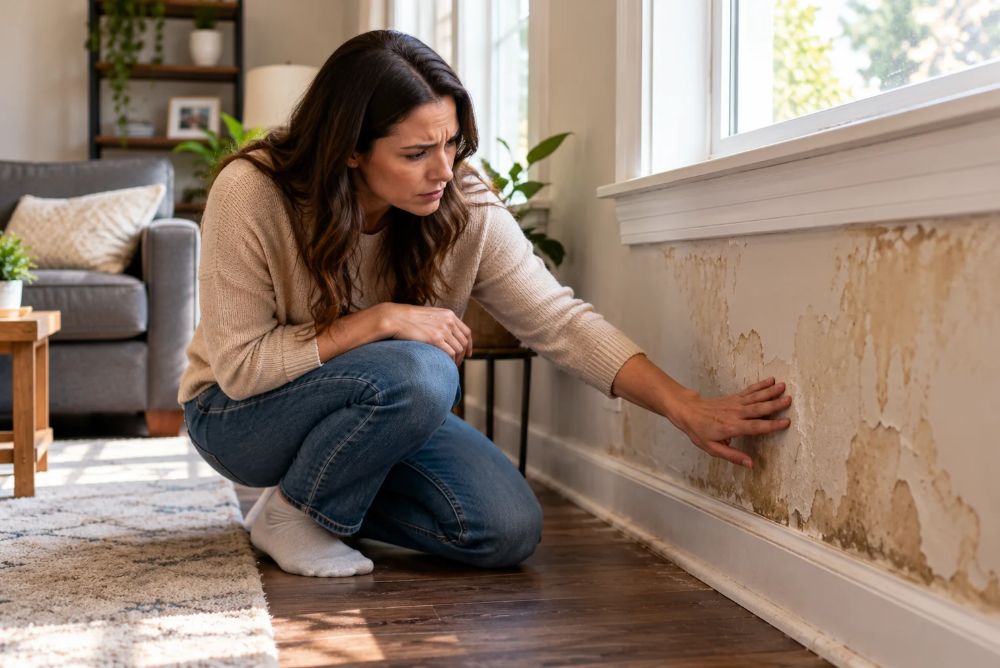
The most important signs of water damage are often small: a faint ceiling stain, a musty smell, or a floorboard that no longer sits flat. These clues usually mean moisture is spreading somewhere you can’t see. Catching them early lets you stop the source before a slow leak becomes structural damage, mold growth, or a much bigger repair.
Sign 1: New Water Stains or Discoloration
New brown, yellow, or rust-colored rings on a ceiling or wall usually mean water is moving through the material behind it. As it dries, minerals collect at the edges, forming a tide line.
Check ceilings below bathrooms, around recessed lights, and along exterior walls. A stain that grows after rain often means a roof leak. One that appears in dry weather points to a plumbing leak or a water supply line issue.
Painting over a stain hides the evidence. It does not stop the water.
Sign 2: Bubbling or Peeling Walls and Ceilings
Bubbling paint, peeling wallpaper, and soft drywall often mean moisture is trapped behind the surface. As water collects, it pushes paint and paper away from the wall, leaving blisters, bulges, or sagging spots.
Drywall that feels spongy or dents easily has likely absorbed water. A sagging ceiling is more urgent because wet drywall gets heavy, so keep people out from under it.
Peeling far from any shower deserves a closer look.
Sign 3: A Musty or Damp Smell
A musty odor that lingers after you clean and air out a room often means moisture is present, even when nothing looks damaged. It tends to be strongest in closets, under sinks, and in basements and crawl spaces.
Your nose often finds hidden water damage before your eyes do. The earthy smell usually comes from damp materials or early mold inside walls or under floors. In the South Puget Sound’s long rainy months, check the crawl space first.
Air fresheners hide the smell, not the source.
Sign 4: Warped or Buckling Floors
Warped flooring, cupped boards, or loose tiles often mean water has reached the floor or the subfloor beneath it. Wood-based materials swell as they absorb moisture, causing them to change shape.
Each material shows it differently:
- Hardwood may cup, with edges higher than the center.
- Laminate can swell and separate at the seams.
- Carpet may feel damp or smell sour.
- Tile can crack or loosen as the subfloor softens.
Watch the floor near dishwashers, washing machines, ice makers, and water heaters, where slow drips can soak a subfloor unseen.
Sign 5: Mold or Mildew That Keeps Returning
Mold or mildew that keeps coming back is a strong sign of excess moisture. Cleaning removes what you can see, but growth returns until the water source is fixed.
The U.S. Environmental Protection Agency says controlling moisture is key to controlling mold, and that materials dried within 24 to 48 hours after a leak usually won’t develop mold.
If growth keeps returning or covers a large area, professional mold testing and remediation can locate the moisture feeding it.
Sign 6: A Sudden Jump in Your Water Bill
An unexplained jump in water use can point to a hidden leak in a pipe, toilet, or supply line. Rates, guests, and irrigation raise bills too, so compare gallons used, not dollars.
The EPA’s WaterSense program suggests a simple test. Read your water meter, use no water for two hours, then read it again. If the number changed, you probably have a leak.
If no faucet or toilet is running, the leak may be inside a wall or underground, and a licensed plumber should be able to find it.
Sign 7: Dripping Sounds or Damp Spots
Dripping or running-water sounds when all fixtures are off can indicate a pipe leaking inside a wall, floor, or ceiling. Damp spots, wet insulation, and heavy condensation are related clues.
Listen at night when the house is quiet. After storms, check attic insulation for dampness and inspect HVAC drain pans for overflow.
What Should You Do Next?
If you find an active leak, shut off water to that fixture or the main valve. Photograph the damage, and stay clear of sagging ceilings and wet outlets.
When Should You Call a Professional?
Call for help when two or more signs of water damage appear together or when you can’t find the source. H2O Away’s water damage restoration team uses moisture meters, thermal imaging cameras, and probes to find water hidden in walls and subfloors.
Frequently Asked Questions
What are the most common signs of water damage?
The most common are water stains, bubbling paint, musty odors, warped floors, and recurring mold. Several together usually signal an active leak.
Can water damage be hidden behind walls?
Yes. Water can soak insulation, framing, and the back of drywall for weeks before anything shows on the painted side.
Does a musty smell always mean water damage?
No, but it usually means excess moisture. High humidity and poor ventilation can cause it too, so look for a leak if the odor lingers after drying the room.
Can water damage cause mold?
Yes. Mold can grow on building materials that stay damp after a leak, and porous materials like drywall, carpet pad, and insulation are especially vulnerable.
When should I call a professional for water damage?
Call when you can’t find the source, when signs keep returning, or when a ceiling sags. Acting early on water damage warning signs helps limit further property damage.
Conclusion
Water damage rarely starts with a flood. It starts with a stain you meant to check, a smell you blamed on the weather, or a bill you assumed was a rate hike. Each of those is your house telling you something.
Headquartered in Tumwater, H2O Away serves Olympia and Thurston County, and nearby South Puget Sound communities. Call us or request a free inspection today, and get answers before small signs of water damage turn into bigger repairs.