
The Fire Damage Restoration Process, Explained Step by Step
Published
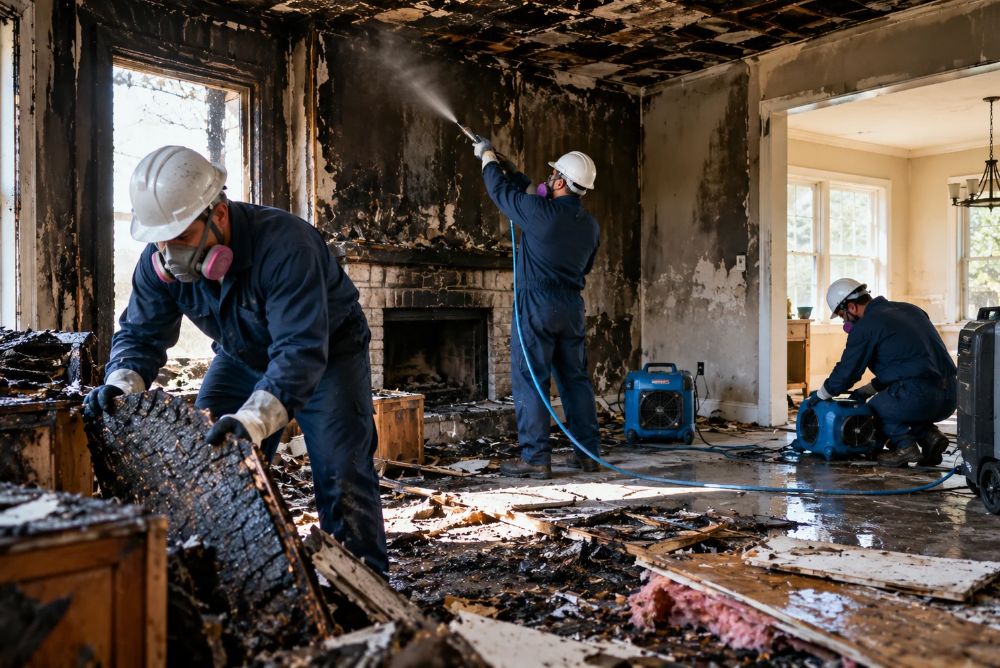
The fire damage restoration process moves a property from emergency protection to full repair in a set order. It begins with safety checks and assessment, then covers board-up, water removal, soot and smoke cleanup, contents cleaning, odor removal, and rebuilding. Each stage depends on the one before it, so rushing or skipping a step often creates new problems later.
This guide walks through every stage of the straightforward process for fire damage restoration, explains what technicians do at each point, and shows where insurance fits in. This can help you know what to expect after a fire in Olympia or the surrounding South Puget Sound area.
What Happens Right After a Fire – Step by Step Process
Before cleanup starts, the building must be safe. The fire department decides when you can go back inside, and nobody should enter before they give the all-clear.
Once the property is cleared, contact a restoration company quickly. Smoke, soot, and moisture keep damaging materials after the flames are out.
Step 1: Inspection and Damage Assessment
Technicians walk the property and document what the flames, smoke, soot, and water affected. Smoke travels well beyond the burned area, so we still check rooms that look untouched.
This stage also produces the photos and notes your insurance claim will need. We offer free inspections, and the findings shape every step that follows.
Step 2: Emergency Board-Up and Property Protection
Fire often leaves windows, doors, and roofs open to the outside. Crews board up and cover these areas to keep out weather and unwanted entry.
In the South Puget Sound, rain is the biggest threat to an exposed building. A single wet week can add water damage to fire damage, so securing the structure comes early.
Step 3: Water Removal and Drying
Firefighting leaves water behind in drywall, flooring, subfloors, and wall cavities. That moisture needs to be found and removed, even when surfaces feel dry to the touch. This is what the water removal and drying process do.
Step 4: Smoke and Soot Cleanup
Soot settles on walls, ceilings, flooring, and furniture, and the longer it sits, the harder it becomes to remove. Different materials and soot types call for different cleaning methods.
This is why wiping surfaces with household cleaner often smears residue deeper into the material. Professional cleanup removes the residue without spreading it to areas that were clean.
Step 5: Contents Cleaning and Restoration
Furniture, clothing, electronics, and personal belongings are assessed one group at a time. Technicians decide what can be cleaned, restored, stored, or replaced.
Salvageable items are typically cleaned and stored while the building work is underway. Keeping them out of the work zone protects them from dust and further exposure.
Step 6: Odor Removal
Smoke odor can linger after the visible soot is gone because smoke particles settle into porous materials such as drywall, carpet, and upholstery. Surface cleaning alone rarely removes it.
Odor removal is a separate stage that treats the affected areas and contents directly. It comes after cleanup so the treatment reaches the source of the smell.
Step 7: Repairs and Reconstruction
The final stage replaces and repairs whatever could not be saved. That can include drywall, insulation, flooring, paint, and, in larger losses, structural framing.
Timelines depend on the damage. Minor fire damage may take several weeks to restore, while significant structural damage can take several months. A dedicated project manager keeps the work moving and keeps you informed until the property is back to its pre-loss condition.
How Insurance Fits Into the Process
Insurance enters the picture on day one, not at the end. Photos, notes, and moisture readings taken during the assessment support your claim, and an adjuster will want to see the damage before you discard items.
H2O Away works with all insurance companies, communicates with your adjuster, and bills the insurer directly when applicable. As third-generation insurance contractors, we know what carriers look for in documentation. Keep receipts for any emergency expenses, too.
Conclusion
The fire damage restoration process works best when each stage happens in order: safe entry, a thorough assessment, protecting the structure, drying, cleaning, odor treatment, and careful rebuilding.
Understanding the sequence helps you ask better questions, spot shortcuts, and work confidently with your insurer. Recovery takes time, but a clear process keeps it organized from the first call to the final repair.
FAQs
What are the steps in the fire damage restoration process?
The process of fire damage restoration has seven main steps: inspection, board-up, water removal and drying, smoke and soot cleanup, contents cleaning, odor removal, and repairs. Each step prepares the property for the next one.
How long does fire damage restoration take?
Minor fire damage may take several weeks to restore, while significant structural damage can take several months. The timeline depends on the extent of smoke, soot, water, and structural damage.
Can you stay in your home during fire damage restoration?
It depends on the damage. Heavy smoke, soot, odors, or damaged utilities often make a home unsafe or unlivable during work, so confirm with the fire department and your restoration team. Many homeowners policies include temporary housing coverage, so check yours.
Does homeowners insurance cover fire damage restoration?
Most standard homeowners policies cover fire damage, but limits and exclusions vary. Review your policy and speak with your adjuster early. A restoration company can document the loss to support the claim.
How soon should fire damage cleanup begin?
Begin cleanup as soon as the property is safe to enter. Smoke, soot, and moisture continue affecting materials and belongings after the fire is out, so waiting usually increases the damage.
Dealing With Fire or Smoke Damage in Olympia?
If a fire has affected your home or business, H2O Away can inspect the property, explain each stage, and coordinate with your insurance provider.
Take assistance from our professionals. You can also see how we serve Olympia and Thurston County.