
How to Choose Between Repair and Full Restoration After Damage?
Published
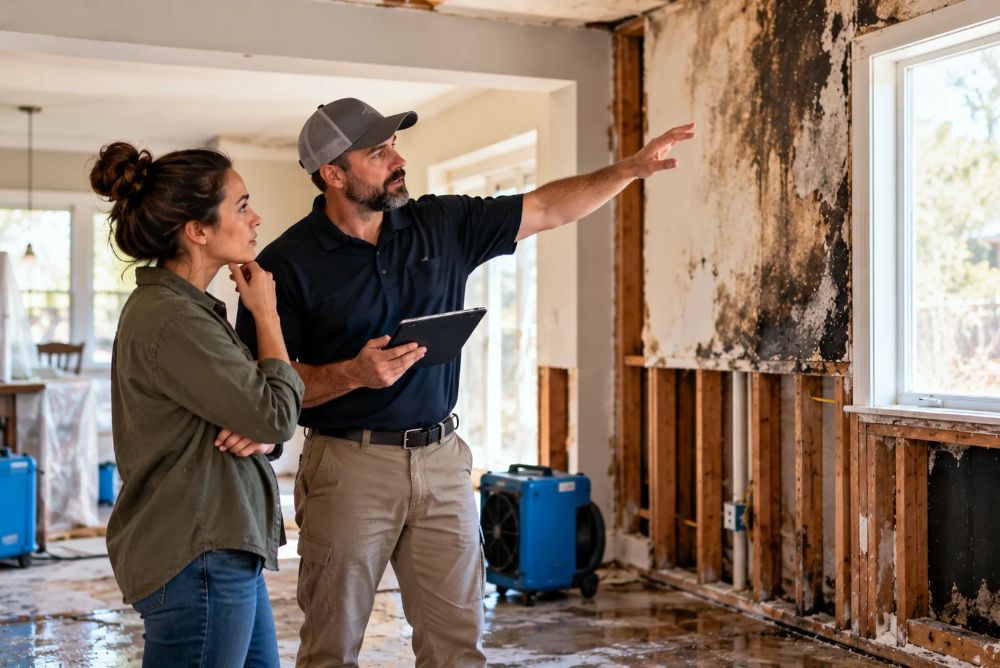
The choice between repair vs. restoration comes down to how deep the damage actually goes, not just what’s visible on the surface. A repair fixes what’s broken, while restoration addresses the underlying moisture, contamination, or structural issue that caused the damage in the first place.
Getting this decision right affects both your budget and whether the same problem shows up again later.
What’s the Real Difference Between Repair and Restoration?
Repair means fixing or replacing a specific damaged item, like patching a section of drywall or replacing a water heater. Restoration is a broader process that addresses the full scope of damage, including hidden moisture, contamination, and the materials affected around the original source.
The repair vs. restoration decision often isn’t obvious right away. A stained ceiling might look like a simple patch job, but the water that caused it may have already reached insulation, framing, or the room below.
How Do You Know If the Damage Is Contained?
Damage that’s contained to one visible spot, with no hidden moisture or contamination, is usually a good candidate for repair alone. Damage that has spread behind walls, under flooring, or into multiple rooms typically needs full restoration.
This is where professional assessment matters most in the repair vs. restoration decision. Moisture meters and thermal imaging can detect water that has traveled beyond what’s visible, which can significantly change the scope of work. A repair that ignores hidden moisture often leads to a second, more expensive fix later.
Does the Type of Water or Damage Source Matter?
Yes, the source of the damage plays a major role in whether repair or restoration is appropriate. The restoration industry generally classifies water damage into categories, from clean water supply-line leaks to contaminated sewage or floodwater, and the category determines what can be safely dried versus what needs to be removed.
Clean water from a supply line, addressed quickly, often allows more of the original material to be saved. Water from sewage backups or flooding usually requires removing affected porous materials, such as carpet, padding, and some drywall, regardless of how the area looks on the surface.
When Does a Simple Repair Make Sense?
A simple repair makes sense when the damage is small, recent, and limited to materials that dried quickly and completely. Fixing a single cracked tile or replacing a section of trim after a brief, clean-water leak typically doesn’t require a full restoration process.
The key factor is whether the source has been fixed and the area is genuinely dry, not just superficially dry. If drying happened within roughly 24 to 48 hours of the leak and moisture readings confirm the material is dry throughout, repair alone may be enough.
When Does Full Restoration Become Necessary?
Full restoration becomes necessary when damage has spread beyond what’s visible, involved contaminated water, or gone untreated long enough for mold growth or structural damage to develop. It’s also the right call after significant events such as flooding, major pipe bursts, or fires
In these situations, restoration typically includes water extraction, structural drying, moisture monitoring, and removal of materials that can’t be safely saved. H2O Away’s water damage restoration process follows this approach, using equipment to confirm materials are fully dry before repairs begin, rather than covering up a problem that’s still there.
How Does Insurance Factor Into the Repair vs. Restoration Decision?
Insurance coverage can influence which approach makes financial sense, though coverage details vary significantly by policy. Some policies distinguish between sudden, accidental damage and damage from neglect or gradual leaks, which can affect what’s covered.
Documenting the damage with photos and a professional assessment before starting any work supports your claim either way. Contact your insurer early in the process, and ask specifically whether your policy covers restoration, repair, or both for your type of loss.
What Happens If You Choose Repair When Restoration Was Needed?
Choosing repair when the underlying damage was more extensive often means the same problem resurfaces, sometimes worse than before. Covering a water-stained ceiling without addressing trapped moisture behind it can lead to mold growth, wood rot, or a repeat repair within months.
This is the most common and costly mistake in the repair vs. restoration decision. A patch that looks finished can hide a moisture source that continues to work long after the visible fix is done.
Frequently Asked Questions
Is restoration always more expensive than repair?
Not necessarily. Restoration addresses the full scope of damage upfront, which can prevent a smaller repair from becoming a larger, more expensive problem later if moisture or contamination was missed.
Can I do a repair myself and skip professional restoration?
For very minor, clearly contained damage from clean water, a homeowner repair may be reasonable. Anything involving contaminated water, hidden moisture, or a large affected area is safer left to a professional assessment first.
How do professionals decide between repair and restoration?
Professionals typically assess the water source, how far moisture has traveled, and how long materials were wet before making a recommendation. Moisture meters and visual inspection both play a role in that decision.
Will my insurance company require a professional assessment?
Many insurers expect documentation from a professional assessment before approving a claim, especially for anything beyond a minor repair. Check your specific policy or ask your adjuster directly.
Which materials usually need replacement rather than repair?
Wet insulation, carpet padding, and materials affected by contaminated water typically need to be replaced rather than dried and repaired. Structural wood, concrete, and some drywall can often be dried and saved if addressed quickly.
Conclusion
The temptation after any kind of damage is to fix what you can see and move on. But the repair vs. restoration decision isn’t really about how bad something looks. It’s about what’s happening in the places you can’t see, and whether the source of the problem was actually addressed or just covered up.
If you’re weighing repair versus full restoration for your Thurston County property, H2O Away can assess the damage and explain what each option entails before you commit to either. Request a free inspection and get a clear answer on what your home actually needs.