
What to Do After Water Damage: First 48 Hours Checklist?
Published
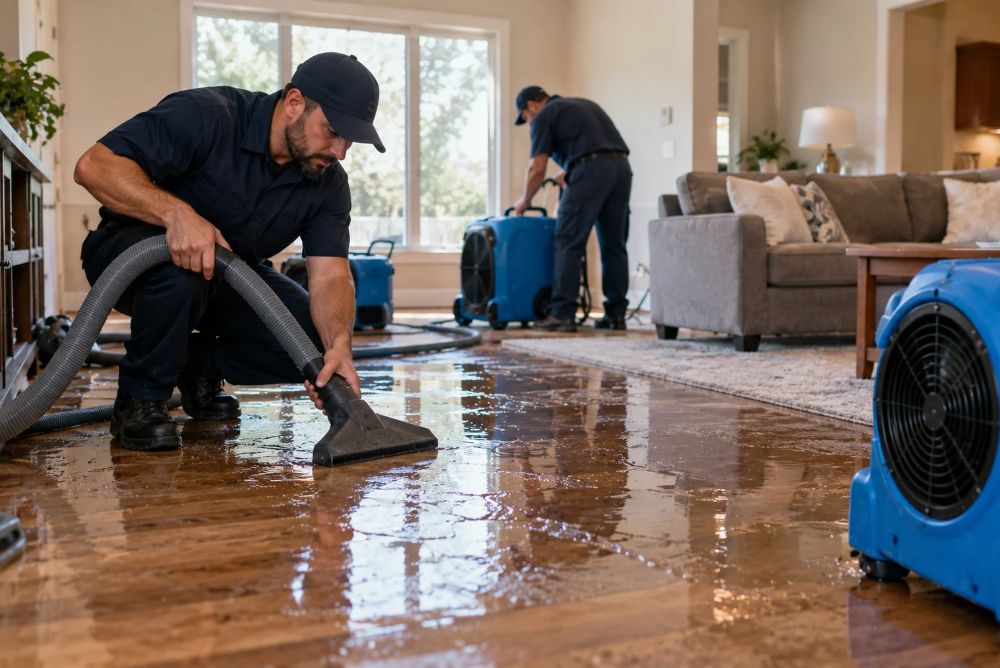
The right water damage first steps are simple: get everyone safe, stop the water if you can do it safely, and protect what you can reach without risk. Then document the damage and start drying quickly, or bring in a professional if the water is contaminated, widespread, or near electrical systems.
What Should You Do Immediately After Water Damage?
Check for danger before anything else. Get people and pets away from standing water, sagging ceilings, and anywhere water may touch outlets, cords, or appliances.
If you smell gas, leave the home and call the gas utility or 911 from outside. The CDC advises calling an electrician if you would have to step into water to reach the main power switch.
Then identify the water source. Where the water came from shapes every step that follows.
Is the Water Clean or Contaminated?
- Clean water from a supply line is lower risk at first, but it can pick up contaminants as it spreads.
- Appliance and toilet leaks may carry soap, waste, or bacteria.
- Floodwater, sewage backups, and water from unknown sources should be treated as contaminated. Avoid direct contact.
How Do You Stop the Water Source?
Close the shutoff valve for the leaking fixture or appliance if it is easy and safe to reach. For a burst pipe or an unclear leak, shut off the home’s main water valve.
Don’t crawl into a flooded or tight crawl space to reach it. If the source is a roof, a storm, or a sewer line, call a qualified professional instead of forcing a fix.
What Should You Avoid After Water Damage?
Avoid anything that trades your safety for speed. Water, electricity, contamination, and weakened ceilings are a dangerous mix.
- Don’t plug in, unplug, or use electrical devices while standing in water or on wet floors.
- Don’t walk under a ceiling that sags or bulges.
- Don’t touch sewage or floodwater.
- Don’t turn the power back on until an electrician confirms it is safe.
What Should You Document for Insurance?
Photograph and video the damage before major cleanup, as long as you can do it safely. Capture the water source, every affected room, and damaged belongings.
Take wide shots first, then close-ups of wet drywall, damaged flooring, and stained ceilings. Start a list of ruined items, and save receipts for fans and supplies. Hold onto damaged items until you know what your insurer needs to see.
Contact your insurer early, since coverage can vary by policy.
When Should You Remove Standing Water?
Standing water should come out as soon as it is safe to remove. The longer it sits, the deeper it soaks into flooring, drywall, and insulation.
A small, clean spill can often be handled with towels or a mop. More than a thin layer of water across several rooms, or any sewage, calls for professional water extraction.
Sewage backups require a specialized process, and professional sewage cleanup crews remove, sanitize, and dry the affected areas.
How Do You Start Drying the Property?
Start drying as soon as the area is safe. Move air through the space, remove moisture, and lift wet items off the floor.
Open windows if the weather allows, and run fans and a dehumidifier only where outlets and floors are dry.
Speed matters. The EPA notes that when wet materials are dried within 24 to 48 hours, mold usually won’t grow.
What Should You Check During the First 24 Hours?
Recheck every affected area within the first day. Water keeps moving after the spill stops, wicking up drywall, spreading under flooring, and soaking into ceilings below.
Look for:
- Baseboards and drywall that feel soft or look darker than before
- Flooring that lifts, cups, or feels spongy
- New ceiling stains in rooms below the leak
- A musty smell that gets stronger
What Should You Do During the First 48 Hours?
By day two, the goal is to confirm that everything is truly drying, not just the surfaces. Any material that is still wet, swelling, or smelling musty needs a professional evaluation.
These first steps for water damage buy time, but they can’t confirm what’s hidden. Bring in a restoration professional if water reached the insulation, sat under the flooring, came from a contaminated source, or spread beyond one room. H2O Away’s water damage restoration team uses moisture meters, thermal imaging cameras, and probes to find hidden water.
Frequently Asked Questions
Is it safe to stay in a water-damaged home?
It can be if the water was clean and the damage is small. Leave if you smell gas, and stay out of rooms with sewage, sagging ceilings, or wet electrical equipment.
Can I clean up water damage myself?
You can handle a small, clean-water spill that dries quickly. Water that soaked walls, spread across rooms, or came from sewage or a flood is safer left to professionals.
Should I throw away wet carpet and drywall?
Not right away. Porous materials soaked with contaminated water often need to be removed, but wait until your insurer has seen them and a professional has assessed what can be dried.
Does homeowners insurance cover water damage?
It depends on your policy and on what caused the water, such as a burst pipe versus flooding from outside. Ask your insurer directly before assuming either way.
What are the water damage first steps for renters?
Stay safe, stop the water if you can, and notify your landlord or property manager in writing right away. Then document the damage for your records and any renters insurance claim.
Conclusion
Water damage feels urgent because it is. The choices you make in the first two days can limit how far the water travels and how much of your home needs rebuilding later.
If your home is in Olympia, Tumwater, or elsewhere in Thurston County, H2O Away can find the moisture you can’t see and dry it properly. Request a free inspection and get expert help with your water damage first steps before hidden moisture turns into a bigger repair.